New Mullet Haircuts for Men: Types, Inspiration & Styling Tips
TL;DR
- What actually counts as a modern mullet?
Short, faded sides that blend into a longer, textured back no more of that one straight chop-line from the ’80s. - Why is this cut everywhere again?
One national survey found that 1 in 5 men now name the mullet as the vintage style they’d most like to see brought back. - What’s the most requested version right now?
The burst fade it wraps the fade around the ear so the back keeps its fullness. - How do you pick the right one for you?
Match the fade and back length to your face shape and how your hair actually behaves, not just to a photo you liked.
| Mullet Style | Best For |
| Burst Fade Mullet | Thick or straight hair, square or angular faces |
| Taper Fade Mullet | First-timers who want a softer transition |
| Curly / Wolf-Cut Mullet | Curly or wavy hair, most face shapes |
| Quiff Mullet | Oval faces, smart-casual versatility |
| Short Mullet | Round faces, lower-commitment starting point |
New Mullet Haircuts for Men: Types, Inspiration & Styling Tips
The mullet doesn’t need an apology anymore. A survey commissioned by Sport Clips Haircuts found that 20% of American men now name this retro cut as the one vintage hairstyle they’d genuinely want back in rotation not as a joke, but as a real go-to look. The difference between today’s version and the one in your uncle’s old photos comes down to technique. Barbers are now using precise fades, deliberate layering, and texture work that make the whole thing look planned, not like hair that just grew wrong.
What Is a Modern Mullet Haircut, and How Is It Different in 2026?
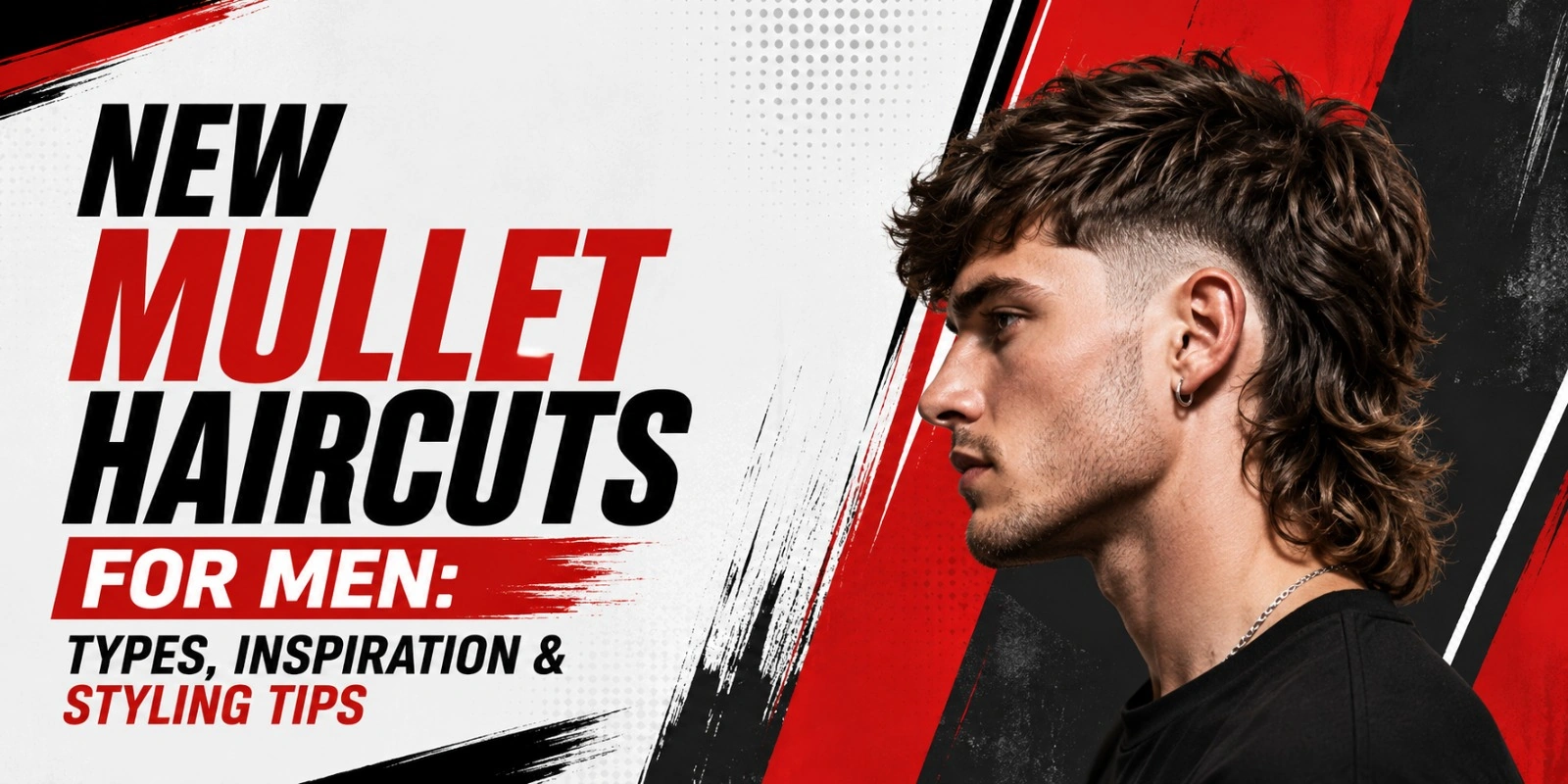
A modern mullet still follows the classic shape: short on top and sides, longer in the back. What’s changed is the transition. Instead of one blunt line separating the sections, you get a blended fade or taper that makes the whole cut read as intentional. Right now, the most requested version is the burst fade, which curves around the ear instead of shooting straight up the side of the head. That keeps the back full while still sharpening everything up top.
A few things are driving this comeback. Fade technique has gotten precise enough that a mullet no longer needs a hard, obvious edge to look sharp; it can be subtle and still hold its shape. Market data tracked by WWD found that searches for the low-key “mini-mullet” jumped 84% year over year, a lot of it coming from younger guys copying looks they’ve spotted on the red carpet. And texture-forward styles like the wolf-cut have turned the back section into something that reads as deliberately shaggy, rather than just overdue for a trim.
Each version is really solving a different problem:
- Taper fade blends more gradually, making it the easiest entry point if you’re not ready to commit to a bold line.
- Curly or wolf-cut layers the top for volume and lets your natural texture carry into the back a natural fit for wavy or curly hair.
- Quiff lifts the front for something a little more polished, so it moves easily from the office to the weekend.
- Short mullet trims the back down to a subtle length, which makes it the easiest one to walk back if the look isn’t for you after all.
How Do You Find the Best Mullet for Your Face Shape and Hair Type?
Most guys fall into one of four face-shape categories, and each one calls for a slightly different cut.
– Round faces tend to look best with more height on top and a tighter fade on the sides, since that combination elongates the face instead of adding width.
– Square or angular faces can usually handle a bolder burst fade, because a strong jawline balances out sharp contrast well.
–Oval faces have the most room to play a curly wolf-cut, a clean taper, almost anything works.
– Longer faces generally look more balanced with extra volume on the sides and a little less height at the crown.
Here’s why “just get a mullet” advice tends to fall flat: fade placement and top volume change the shape of your whole head, not just your hairstyle.
A burst fade that flatters a square jaw can look harsh on a round face, and a tall, voluminous top that balances a long face can make a round face look narrower and longer than intended which reads as an accident, not a style choice.
Hair texture matters just as much as face shape when it comes to product. A light matte clay worked through the top helps define individual pieces on straighter hair without flattening the volume a round or long face needs. Curlier hair usually holds up better with a texture paste, which fights frizz through the day better than clay does.
Tip: Before your appointment, pull your hair straight back and take a look at your hairline and jaw in the mirror. That quick check tells you your natural face width and gives you and your barber a real starting point for how bold your fade should be.
What Happens If You Get the Wrong Mullet Cut or Skip Touch-Ups?
This cut lives or dies on the fade line. Once that line grows out, the whole mullet loses its shape ,it doesn’t just get a little shaggy the way most short haircuts do when you’re overdue, it stops looking like a mullet at all and starts looking like hair that needs a cut.
In the first 1 to 3 weeks after a cut, the fade softens gradually and still reads as intentional. By weeks 4 to 6, the line between the fade and the top starts to blur, and the top section often creeps over the ears. Past 8 weeks without a touch-up, the sides and back can blend together completely, and at that point most barbers need a bigger correction cut to redefine the shape rather than a simple trim.
Regular touch-ups every 3 to 4 weeks keep the fade sharp while the back keeps growing out, which is really the whole point of the cut.]
Between visits, a small amount of texture paste or smoothing cream worked through damp hair helps control frizz and keeps the back looking styled instead of just overgrown.
Tip: If you run a hand over your head and can’t feel a clear line between the fade and the top anymore, that’s your sign you’re overdue no matter how many weeks it’s technically been.
What’s the Right Mullet Style and Maintenance Schedule for Fort McMurray and Toronto Guys?
Where you live changes how this cut behaves day to day. Fort McMurray’s long, cold, dry winters tend to make hair more static and harder to style without a light product to control flyaways. Toronto’s humid summers work against curl and texture definition, softening a wolf-cut or curly mullet faster than it would in drier air.
A routine that works well for most guys:
- Wash and apply a light styling product 2 to 3 times a week more often during Toronto’s humid stretches.
- Book a fade touch-up every 3 to 4 weeks to keep the line sharp.
- Through Fort McMurray’s driest winter weeks, a leave-in product or lighter clay helps manage static before you style.
- Bring reference photos and be specific about fade height and back length. “Mullet” covers a lot of ground, and your barber can’t read your mind.
MVP Modern Barbers runs shops across five Canadian cities, including Fort McMurray and Toronto, so the same consultation-first approach applies whether you’re booking a burst fade out west or a curly wolf-cut downtown.
The Hall of Fame Haircut includes a consultation, hot towel, scalp massage, wash, cut and style, plus complimentary neck trims between full cuts a solid, low-risk way to get a barber’s honest read on fade placement before you commit to anything bold.
Looking for the right barbershop for a mullet cut near you? Find your nearest MVP Modern Barbers location to book online or through the app. You can also call +1 (289) 981-7288 and ask a barber which mullet variation actually fits your hair type before you book anything.
Full Article Key Takeaways
- Modern mullets trade the old blunt dividing line for blended fades, most often a burst fade curving around the ear.
- Survey data shows 1 in 5 men rank the mullet as the vintage style they most want back.
- Face shape decides fade boldness and top volume more than personal taste alone.
- Fade lines typically need refreshing every 3 to 4 weeks to keep a mullet looking intentional.
- Climate shapes your styling routine: dry Fort McMurray winters call for anti-static product, humid Toronto summers call for more frequent touch-ups on curl definition.
- MVP Modern Barbers’ Hall of Fame Haircut includes a consultation, making it a low-risk way to try a mullet for the first time.
- Fort McMurray’s dry winters and Toronto’s humid summers call for different product and wash routines.
- Most mullets need a fade touch-up every 3 to 4 weeks, regardless of city.
- Bring specific reference photos rather than just saying “mullet.”
- MVP Modern Barbers operates in Fort McMurray, Toronto, Halifax, Moncton, and Saskatoon.
- The Hall of Fame Haircut’s built-in consultation is a low-risk way to test a mullet before committing to a bold fade.
- Complimentary neck trims between full cuts help keep the fade line clean without a full rebooking.
- Call ahead or use the app to confirm your barber has mullet experience if it’s your first time trying the cut.
FAQ
Q: What is a modern mullet haircut?
A: A modern mullet pairs short, faded sides with a longer, textured back, using techniques like burst fades and layering instead of one blunt cut line. That’s what separates it from the original 1980s version.
Q: What’s the best mullet for a round face?
A: A short mullet or quiff mullet with a tighter side fade and more height on top tends to work best, since that combination elongates a round face instead of adding width to it.
Q: Is the burst fade mullet still popular in 2026?
A: Yes the burst fade mullet remains the most requested variation, since it curves the fade around the ear rather than straight up the side, keeping the back full while sharpening the top.
Q: How often does a mullet need a touch-up?
A: Most mullets need a fade touch-up every 3 to 4 weeks. Past 8 weeks without one, the fade and back often blend together and need a larger correction cut.
Q: Can I get a mullet with curly hair?
A: Yes curly and wavy hair works especially well for a wolf-cut mullet, which layers the top to add volume while letting your natural curl pattern flow into the longer back section.
Q: Does cold, dry weather in Fort McMurray affect mullet styles?
A: Long stretches of cold, dry air can make hair more static, so a light leave-in product or clay before styling helps keep flyaways down through the winter months.
Q: Does MVP Modern Barbers offer mullet cuts in Fort McMurray and Toronto?
A: Yes MVP Modern Barbers has locations in Fort McMurray and Toronto, and the Hall of Fame Haircut includes a consultation to help figure out which mullet variation fits your face shape and hair type.
Q: How do I book a mullet haircut near me?
A: You can book a mullet at any MVP Modern Barbers location, including Fort McMurray and Toronto, through the website, the MVP app, or by calling +1 (289) 981-7288.