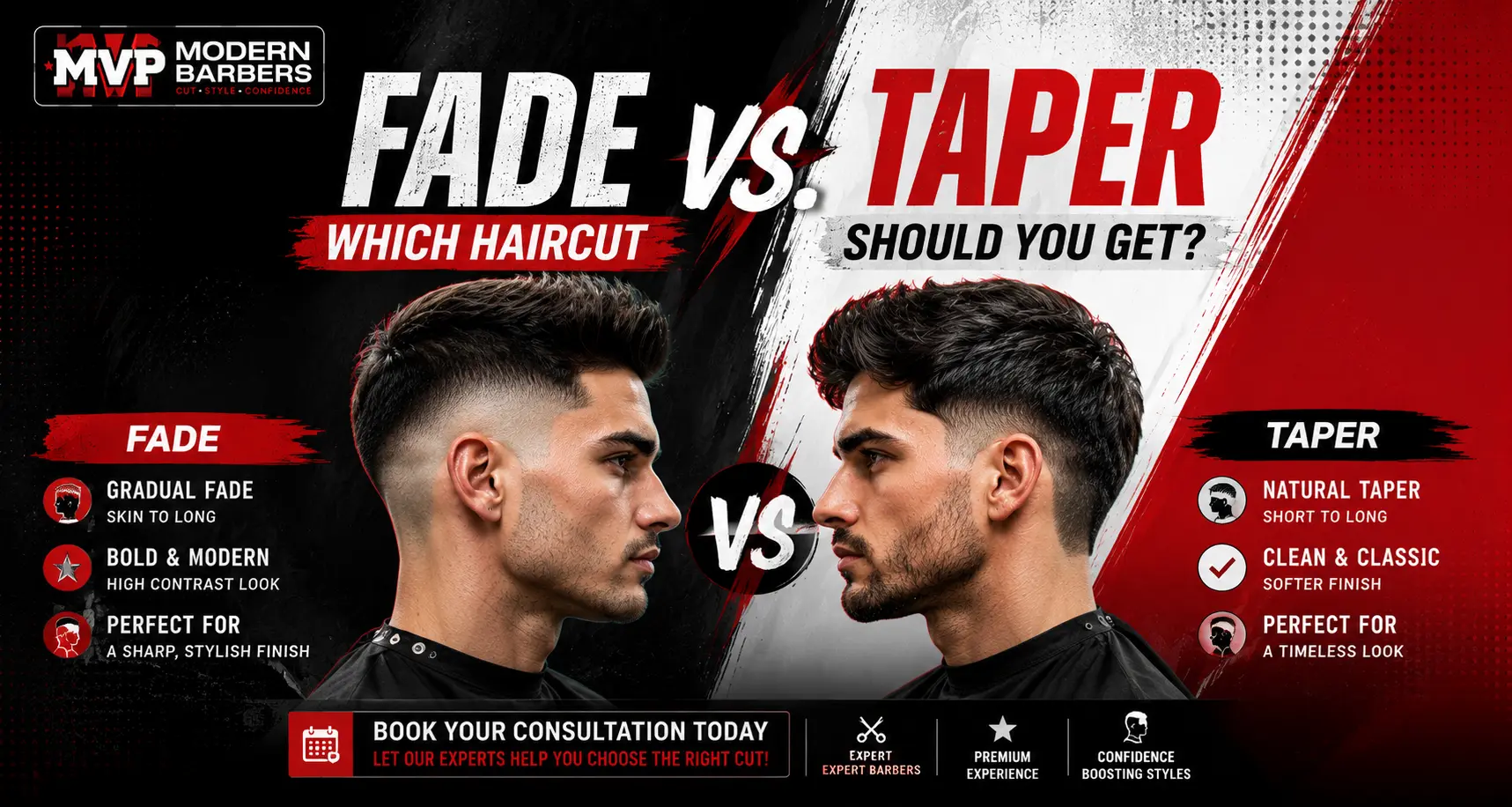
Fade vs. Taper: Which Haircut Should You Get?
Quick answer: A taper gradually shortens your hair for a soft, natural blend that never fully exposes the scalp. A fade cuts much closer to the skin, creating a sharp, high-contrast look. If you want something low-key and professional, go taper. If you want bold and modern, go fade. Your hair type, face shape, and how often you can hit the barbershop should make the final call.
Still not sure? That’s fair; a lot of guys ask their barber for a “fade” and a “taper” and get the exact same haircut, or worse, not what they pictured at all. Let’s clear that up for good.
Why This Debate Actually Matters
Here’s the thing: fade vs taper haircut confusion is one of the most searched grooming questions out there, and for good reason. The two terms get thrown around like they’re interchangeable. They’re not.
In this guide, we’ll break down:
- What a taper actually is (and isn’t)
- What a fade actually is (and isn’t)
- The real differences between the two, side by side
- How to pick the right one for your hair, face shape, and lifestyle
- How to talk to your barber so you get exactly what you want
By the end, you’ll walk into your next barbershop appointment knowing exactly what to ask for.
What Is a Taper Haircut?
A taper haircut gradually shortens your hair as it moves from the top of your head down to your sides, back, and neckline. The key word here is gradual. There’s no dramatic drop-off, no shock of bare skin just a smooth, natural blend.
Tapers keep more length overall. Even at their shortest point, tapers rarely go all the way down to the skin. That’s what gives them their classic, understated look.
Why People Choose a Taper
- It’s low-maintenance and grows out cleanly
- It looks polished in professional or formal settings
- It pairs well with classic styles like a side part, slick back, or crew cut
- It’s forgiving if you go a few extra weeks between cuts
Common Types of Tapers
- Low taper: starts closer to the ears and neckline, very subtle
- Mid taper: starts around the temples, a balanced, everyday option
- High taper: starts higher on the head for a bit more contrast, while still staying softer than a fade
Think of a taper as a dimmer switch. The light doesn’t cut off it just fades down smoothly.
What Is a Fade Haircut?
A fade haircut also shortens your hair from top to bottom, but it does it much more aggressively. Instead of a soft blend, a fade creates a sharp, high-contrast transition, often cutting all the way down to bare skin.
This is the style that gives you that “clean, just-left-the-barbershop” look. It’s bold, it’s modern, and it photographs incredibly well.
Why People Choose a Fade
- It creates a sharp, eye-catching contrast between the top and sides
- It looks fresh and modern, especially for younger or trend-focused guys
- It pairs perfectly with line-ups, designs, and textured tops
- It works great for guys who like getting regular haircuts anyway
Common Types of Fades
- Skin fade (bald fade) goes all the way to bare skin for maximum contrast
- Low fade starts just above the ears, more subtle than other fades
- Mid fade starts around the temples, a middle-ground option
- High fade starts higher on the head for a bold, dramatic look
- Drop fade curves down behind the ear, following the natural shape of your head
If a taper is a dimmer switch, a fade is a light switch. The hair doesn’t fade gently it disappears.
Taper vs. Fade Haircut: Key Differences at a Glance
Here’s the side-by-side breakdown to settle the taper vs fade debate once and for all:
Feature | Taper | Fade |
Transition style | Gradual, soft blend | Sharp, high-contrast |
Shortest point | Rarely reaches skin | Often goes to bare skin |
Maintenance | Every 4–6 weeks | Every 2–3 weeks |
Best for | Professional, classic looks | Bold, modern looks |
Grow-out | Forgiving, ages well | Needs touch-ups sooner |
Vibe | Understated, refined | Sharp, statement-making |
The biggest thing to remember: every fade is technically a type of taper, but not every taper is a fade. A fade is just a taper taken to its most dramatic extreme closer to the skin, with more contrast.
So when someone asks “fade or taper?”, they’re really asking: how much contrast do I want, and how often am I willing to maintain it?
Wait, What About a “Taper Fade”? Is That a Third Thing?
You’ve probably seen the term “taper fade” thrown around too, and yes, it adds to the confusion.
A taper fade is a hybrid it starts with the gradual blend of a classic taper but finishes with the tighter, closer-to-skin styling of a fade. It’s often used loosely to describe any fade that isn’t fully bald, which is part of why “taper” and “fade” get mixed up so often in the first place.
The takeaway: if your barber uses “taper” and “fade” interchangeably, don’t panic just be specific about how short and how sharp you want the sides to go.
How to Choose Between a Fade or Taper
This is the part that actually matters. Here’s how to figure out which one is right for you.
1. Your Hair Type & Texture
- Straight hair: Both styles work well and are easy for barbers to blend cleanly.
- Wavy hair: Tapers tend to show off natural texture nicely without looking too severe.
- Curly or coily hair: Fades, especially skin fades, create striking contrast against curls on top and are a very popular combo.
- Thinning hair: A taper is often more forgiving, since it doesn’t draw as much attention to the scalp.
2. Your Face Shape
- Round faces: A higher taper or fade can add length and angles to the face.
- Square faces: Both styles work, but a taper often softens strong jawlines nicely.
- Oval faces: You’ve got the most flexibility here — almost any taper or fade will suit you.
- Long/oblong faces: Lower fades or tapers help avoid adding extra visual height.
3. Your Maintenance Tolerance
Be honest with yourself here:
- Can only get to the barbershop once a month? Taper.
- Don’t mind popping in every 2–3 weeks for a clean-up? Fade.
A fade that’s allowed to grow out too long starts to look messy fast, since the contrast is what makes it work in the first place.
4. Your Lifestyle & Setting
- Corporate job, formal dress code, or an older/conservative environment? A taper keeps things polished without drawing too much attention.
- Creative field, school, casual job, or do you just like standing out? A fade brings the edge.
5. Your Age & Occasion
Younger guys, including teens, getting their first “real” barbershop cut often gravitate toward fades because they’re trendy and pair well with modern styles on top. But a clean taper works just as well for school, sports, or a first job interview, and it’s a great low-pressure option if you’re new to getting professional cuts.
Maintenance & Upkeep: Which One Lasts Longer?
If lifespan between cuts matters to you, this is a deciding factor.
Tapers:
- Typically need a refresh every 4–6 weeks
- Grow out gradually without losing their shape
- Great option if your schedule (or budget) doesn’t allow frequent barbershop visits
Fades:
- Usually need touch-ups every 2–3 weeks
- The sharp line between skin and hair grows out visibly faster
- Worth it if you love that crisp, just-cut look consistently
A little at-home upkeep brushing hair forward daily, using a light styling product, and avoiding letting it grow past the point of no return can stretch either style a bit longer between visits.
How to Ask Your Barber for a Fade or Taper
Miscommunication at the chair is the #1 reason people leave disappointed. Here’s how to avoid it:
- Bring a reference photo. “Fade” and “taper” mean slightly different things to different barbers a picture removes all guesswork.
- Use specific terms. Say “low skin fade” or “mid taper,” not just “short on the sides.”
- Mention your guard number preference if you know it (e.g., a #2 on the sides).
- Talk through your face shape and lifestyle, a good barber will ask, but it helps to bring it up yourself.
- Ask questions during the consultation. A quality barbershop experience should feel like a conversation, not a guessing game.
At MVP Modern Barbers, every visit starts with a real consultation not a rushed clipper job, so you walk out with a cut that actually matches what you asked for.
Fade vs. Taper: Which One Should You Actually Get?
Let’s simplify this into one final gut-check:
Choose a taper if:
- You want a low-maintenance, professional look
- You prefer a subtle transition over sharp contrast
- You can’t get to the barbershop more than once a month
- You want a style that ages up well and never looks “trendy”
Choose a fade if:
- You want a bold, modern, high-contrast look
- You don’t mind visiting the barbershop every 2–3 weeks
- You want to pair your cut with a design, line-up, or textured top
- You like a sharper, more statement-making style
Neither one is objectively “better” it genuinely comes down to your hair, your face shape, and how much upkeep fits your life.
FAQ:
What’s the difference between a fade and a taper haircut? A taper gradually shortens hair without reaching bare skin, creating a soft blend. A fade cuts much closer often all the way to the skin for a sharper, more dramatic contrast.
Is a taper or fade better for curly hair? Both work, but fades tend to create striking contrast against curly or coily hair on top, which is why skin fades are especially popular with curl-heavy styles.
Which lasts longer, a fade or a taper? Tapers last longer between cuts, usually 4–6 weeks, because the gradual blend grows out more forgivingly. Fades need touch-ups every 2–3 weeks to keep their sharp contrast looking clean.
Can a taper be turned into a fade later? Yes. Your barber can simply take the sides shorter and closer to the skin during a future visit going from taper to fade is an easy adjustment.
Is a fade or taper more professional for work? Tapers are generally seen as more conservative and office-friendly, though low fades can also look sharp and professional depending on your workplace culture.
How much does a fade vs. taper haircut cost? Pricing depends on your barbershop and location, but fades and tapers are typically priced the same since the base service a clipper cut with a blend is the same. Check with your local barbershop for exact pricing.
Ready to find out which one suits you best? Book a consultation at your nearest MVP Modern Barbers location, and let a professional barber walk you through it in person.